The flooring guide
Refinish or Replace? How to Tell What Your Floors Really Need
By Essential Flooring · · 6 min read
Tired floors do not always need tearing out. Here is how to tell whether sanding will fix yours, using a flashlight and a floor vent.
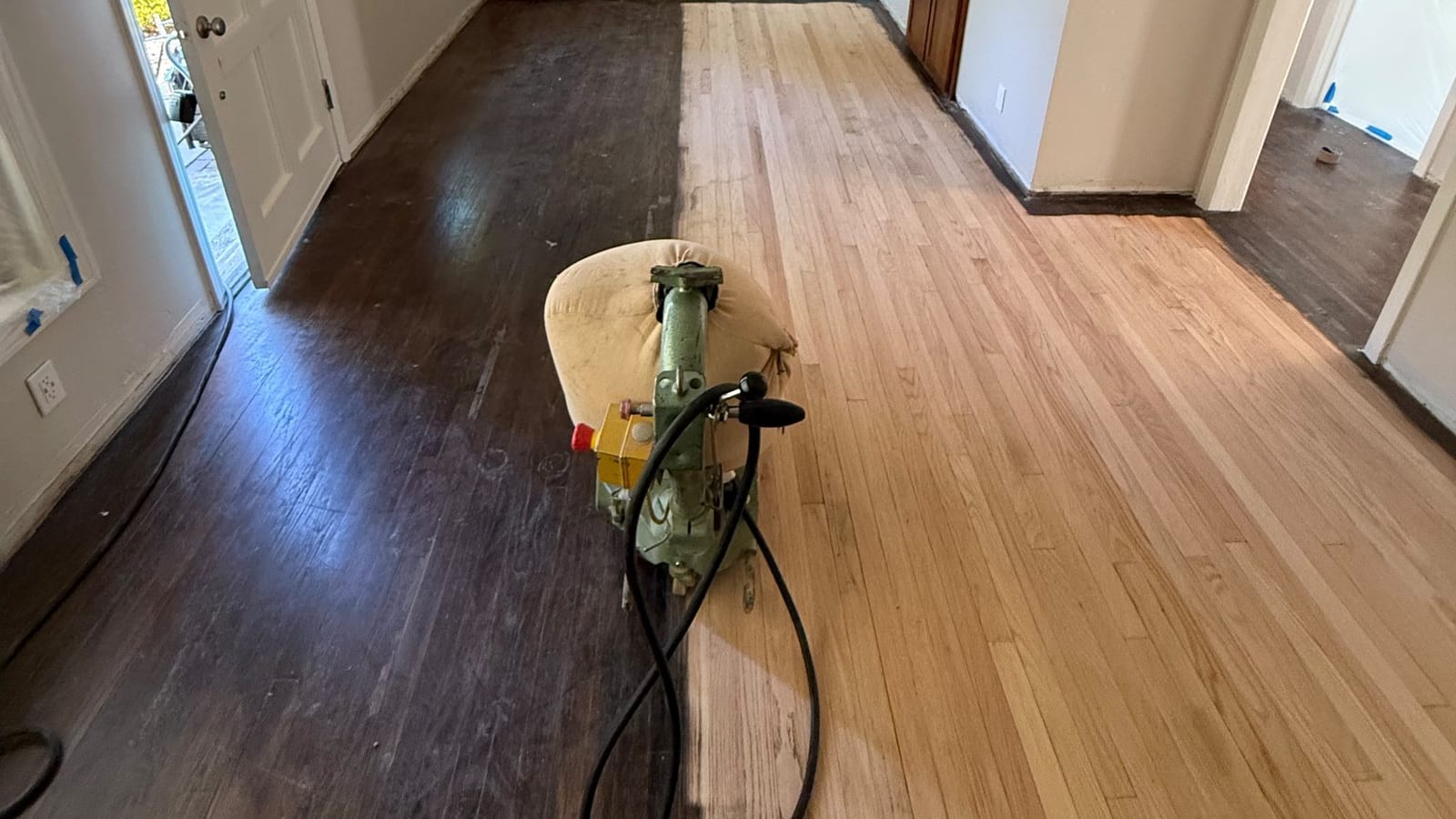
Almost every call starts the same way. The floors look tired, and nobody is sure whether that means sanding them back or tearing them out. It is a fair question, and the answer is usually simpler to reach than people expect. You need to know three things: what the floor is made of, how much wood is left on top, and what is happening underneath.
Here is how we work through it in a Sacramento home, so you can do most of it yourself before anyone knocks on your door.
First, find out what you actually have
Refinishing is only possible on real wood, and not all wood floors are the same.
Solid hardwood is one piece of wood all the way through, usually three quarters of an inch thick. It is the best case. There is a lot of material to work with, and a floor like this can be sanded and refinished several times over its life.
Engineered hardwood is a thin layer of real wood glued over plywood. That top layer, the wear layer, is what decides everything. Some are thick enough to sand two or three times. Some are barely thicker than a business card and cannot be sanded at all.
Laminate and luxury vinyl plank are not wood. They are a photograph of wood under a protective coat. They cannot be refinished, only replaced. If you can find a spot where the pattern repeats itself exactly, you are almost certainly looking at one of these.
Then, check how much wood is left
Every full sanding takes off a little material, roughly a thirty second of an inch. That sounds like nothing, and on a solid floor it very nearly is. On a thin engineered floor it can be everything.
You can usually check without tools. Pull up a floor vent and look at the cut edge of a board. You will see either one solid piece of wood, or clear layers like plywood with a thin cap on top. A doorway threshold or the edge of a stair nosing will tell you the same thing.
What you are looking for is the distance between the surface and the top of the tongue and groove joint. If there is a healthy amount of wood above it, the floor has more sandings in it. If the top layer looks paper thin, or if you can already see plywood showing through in the busiest spots, sanding will only make that worse.
When refinishing is the right call
Refinishing solves surface problems, and surface problems are most of what people actually have:
- Scratches, scuffs and pet marks that live in the finish rather than in the wood
- A dull, cloudy surface that no longer responds to cleaning
- Sun fading, or pale rectangles where a rug used to be
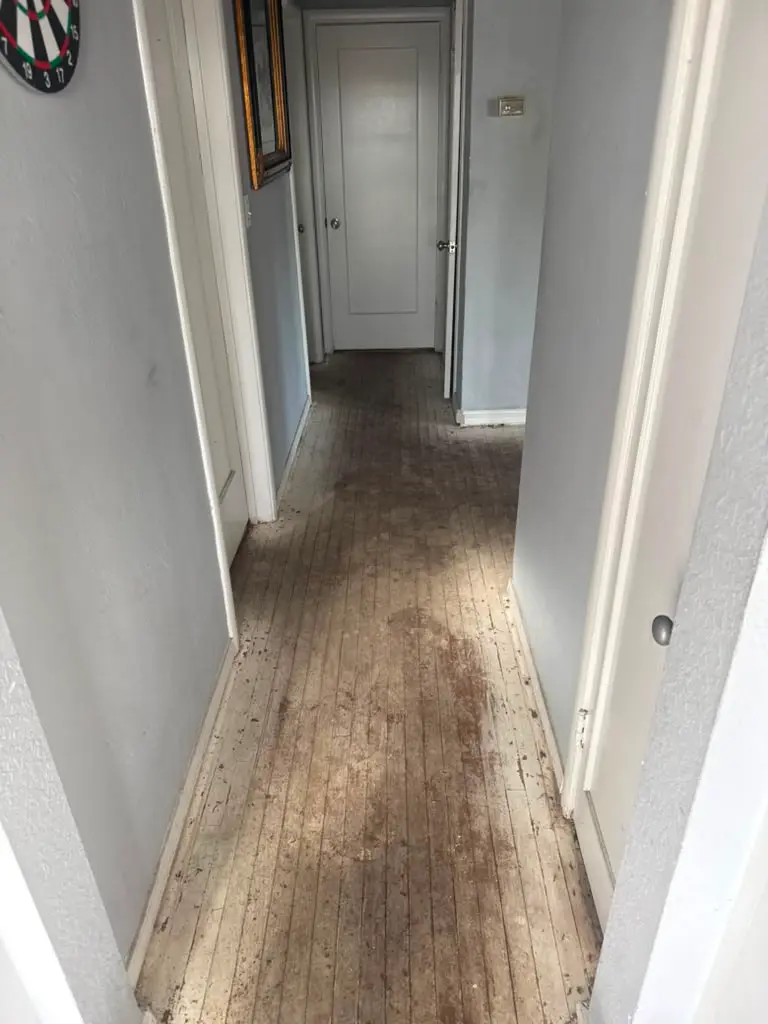
- Grey or black traffic paths down a hallway
- A colour you have simply stopped liking
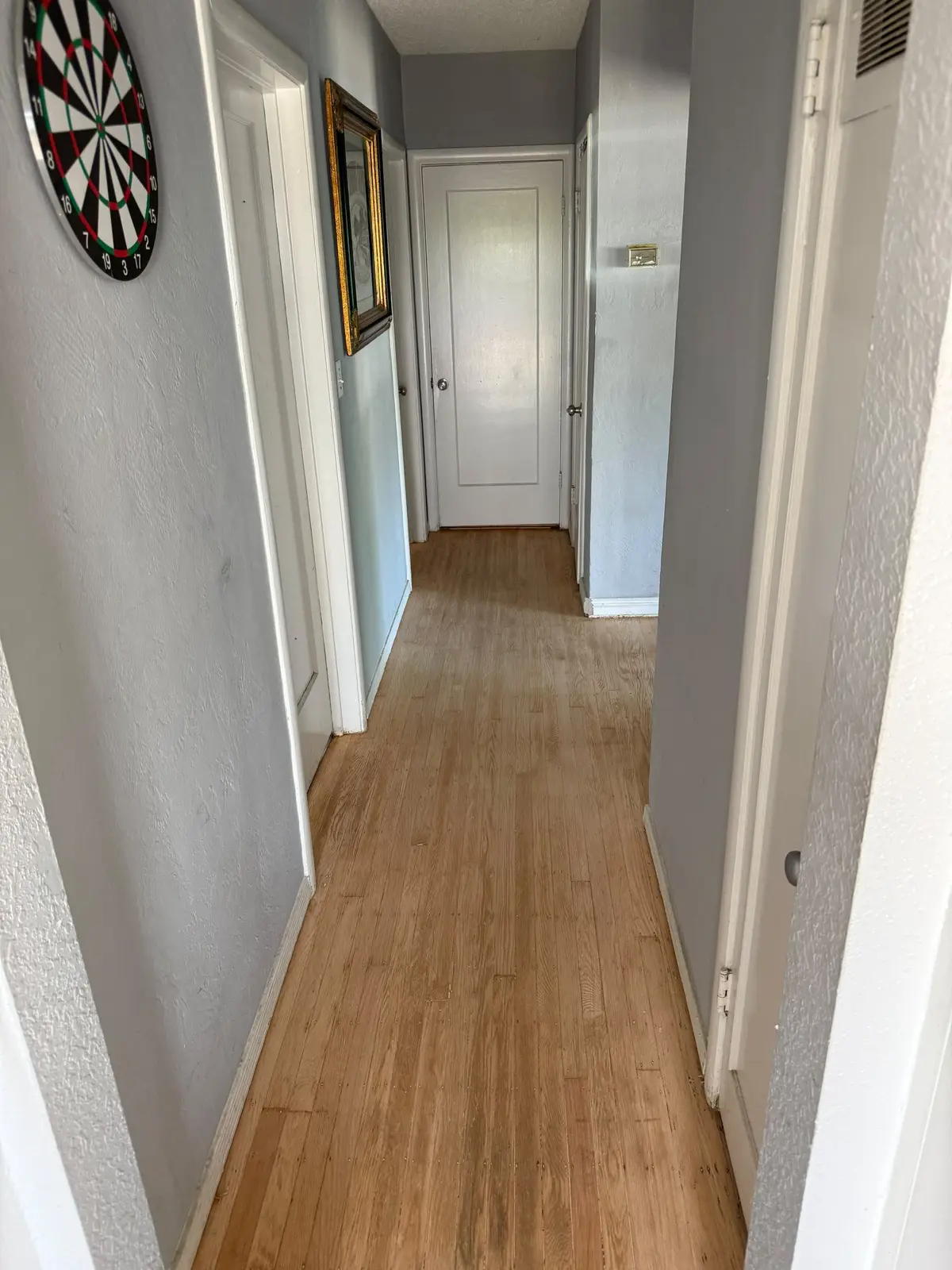
- Boards that were covered by carpet for twenty years and came out better than expected
In all of these cases the wood itself is fine. What has failed is the coating over it. Sanding removes that coating and the top skin of damaged wood with it, and what comes back is the floor you had on the first day.
When replacing is the honest answer
Sometimes the right advice is to stop spending money on a floor. We will tell you when that is the case, because a beautiful finish over a bad floor is a waste of your money and our time.
Replace rather than refinish when:
- The floor has already been sanded to its limit. Nails or staples showing at the surface, or a wear layer that has worn through, means there is nothing left to remove.
- Water got underneath and stayed. Boards that cup and do not flatten out after the room has dried, or a floor that smells musty near a dishwasher or a slider, usually have a problem below the surface that sanding cannot reach.
- The subfloor moves. Widespread bounce, or gaps that open and close with the seasons across the whole room, points at what the floor is sitting on, not at the floor.
- It is engineered with a very thin wear layer, or it is laminate or vinyl. There is nothing to sand.
One case sits in the middle. A floor can be sound in most rooms and finished in one. Replacing the failed section and refinishing everything together often costs less than a full replacement and ends up looking like one continuous floor, because the stain is matched across old and new at the same time.
Wanting a different colour is not a reason to replace
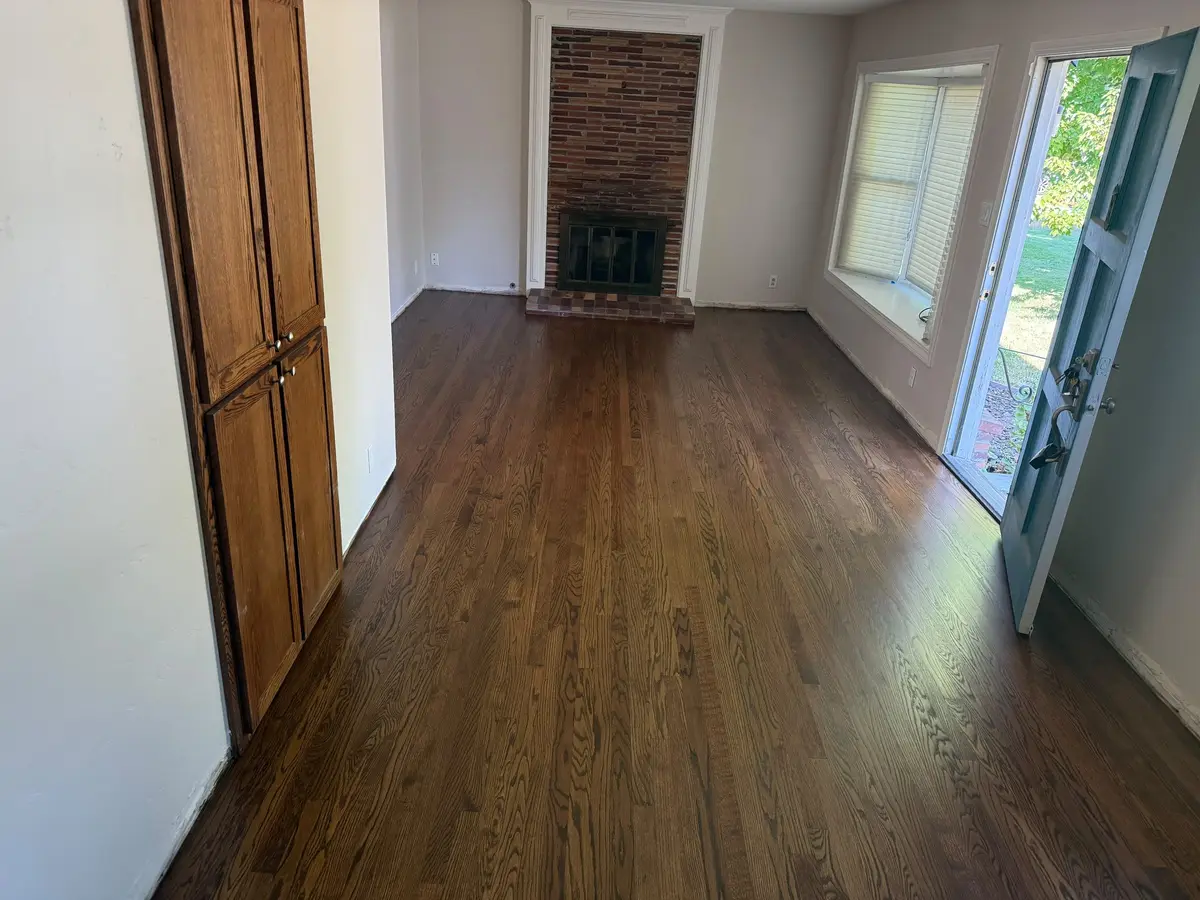
This one comes up constantly. People assume that going from a dark floor to a light one, or the other way around, means a new floor. It does not. Colour lives in the stain, and stain goes on after sanding, when the wood is bare.
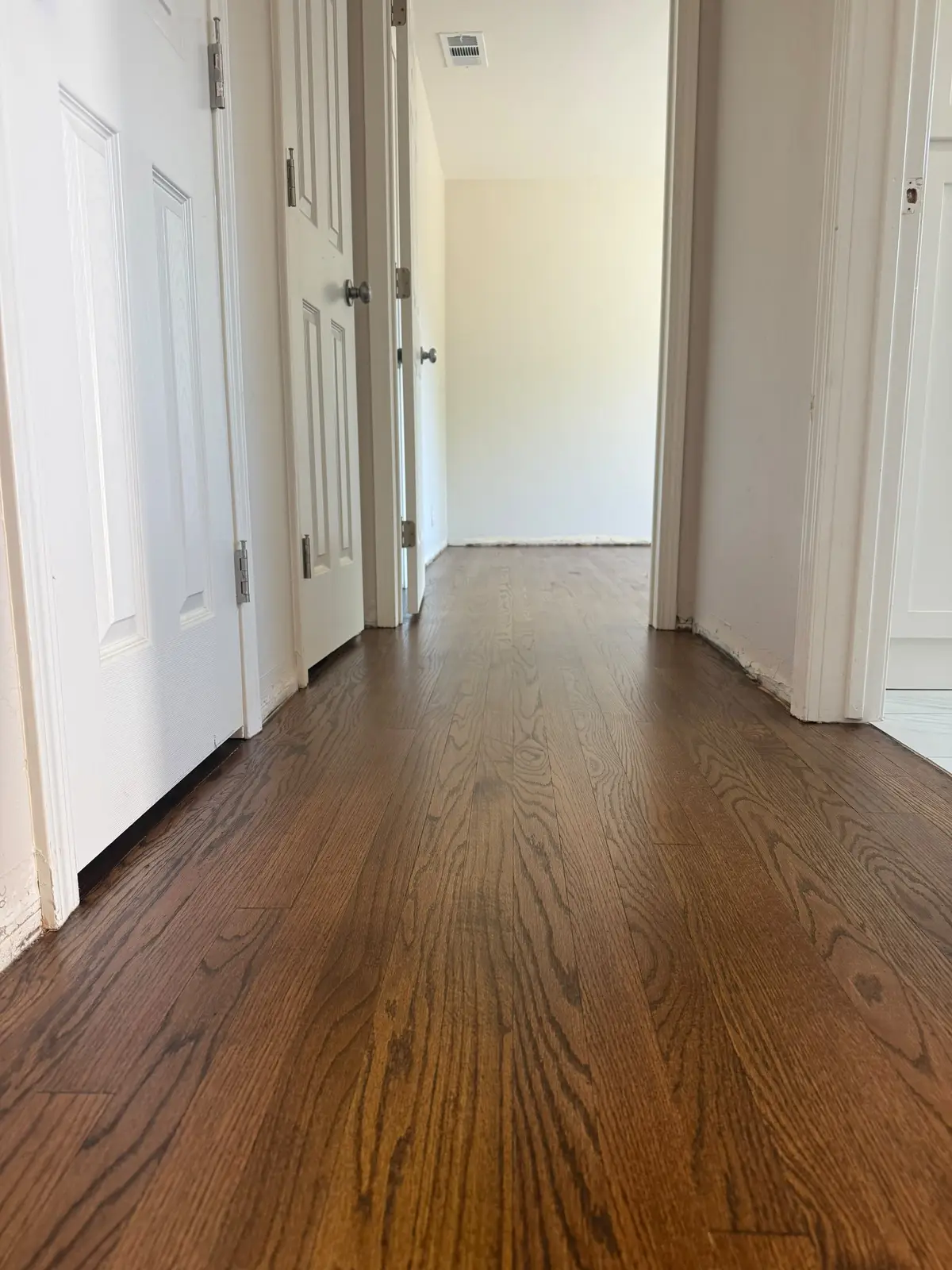
The floor below was a dark, tired oak in a Carmichael house. It is the same wood, sanded back and finished in a warmer tone.
What refinishing is actually like to live in
Worth knowing before you decide:
- Dust. Modern sanders run with vacuum containment, and we seal off the rooms we are not working in. It is not the flour storm people remember from the nineties, but it is still a job site.
- Time. A typical job runs a few days from first sanding to last coat. Larger homes and custom colour matching take longer.
- Curing. You can usually walk on the floor in socks well before it is fully hardened. Furniture and rugs need to wait longer, and we will tell you exactly how long for the finish we used on your floor.
- Pets. Claws and fresh finish do not mix. Plan somewhere else for a few days.
Five minutes and a flashlight
Before you call anyone:
- Pull a vent cover and look at the edge of a board. Solid, engineered, or not wood at all?
- Shine a light across the floor at a low angle. Damage that disappears is in the finish. Damage you can feel with a fingernail is in the wood.
- Press hard in a few places. Any give, bounce or hollow sound is a subfloor question.
- Check the wettest rooms first. Kitchens, laundry rooms and back doors tell the truth earliest.
- Look at the busiest three feet of hallway. That is where your floor is oldest.
Still not sure
That is normal, and it is what estimates are for. We come out, look at the boards, check what is underneath, and tell you plainly which of the two you are looking at. If replacing is the better answer for your floor, we will say so.
Estimates are free, and there is no charge for an honest no.